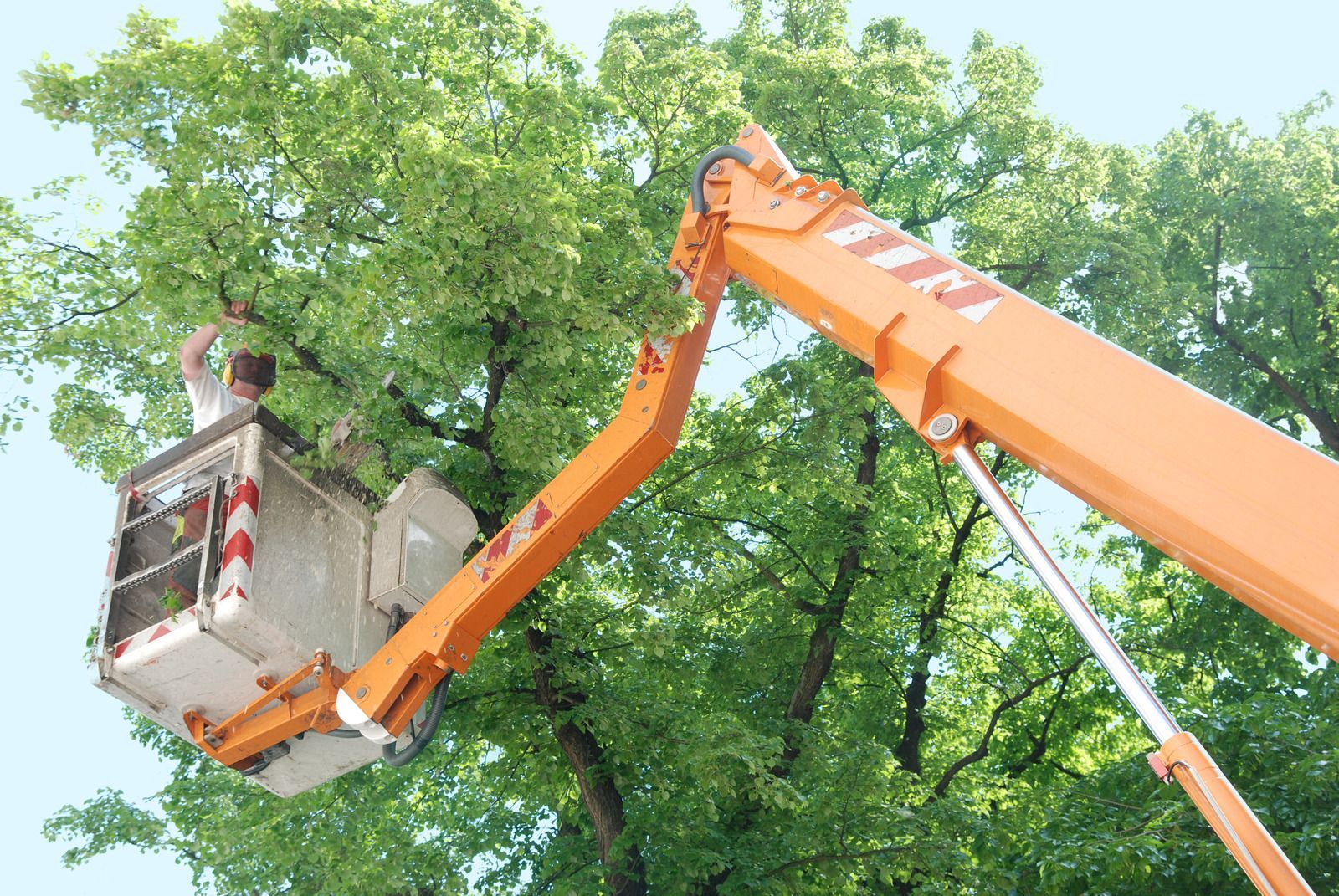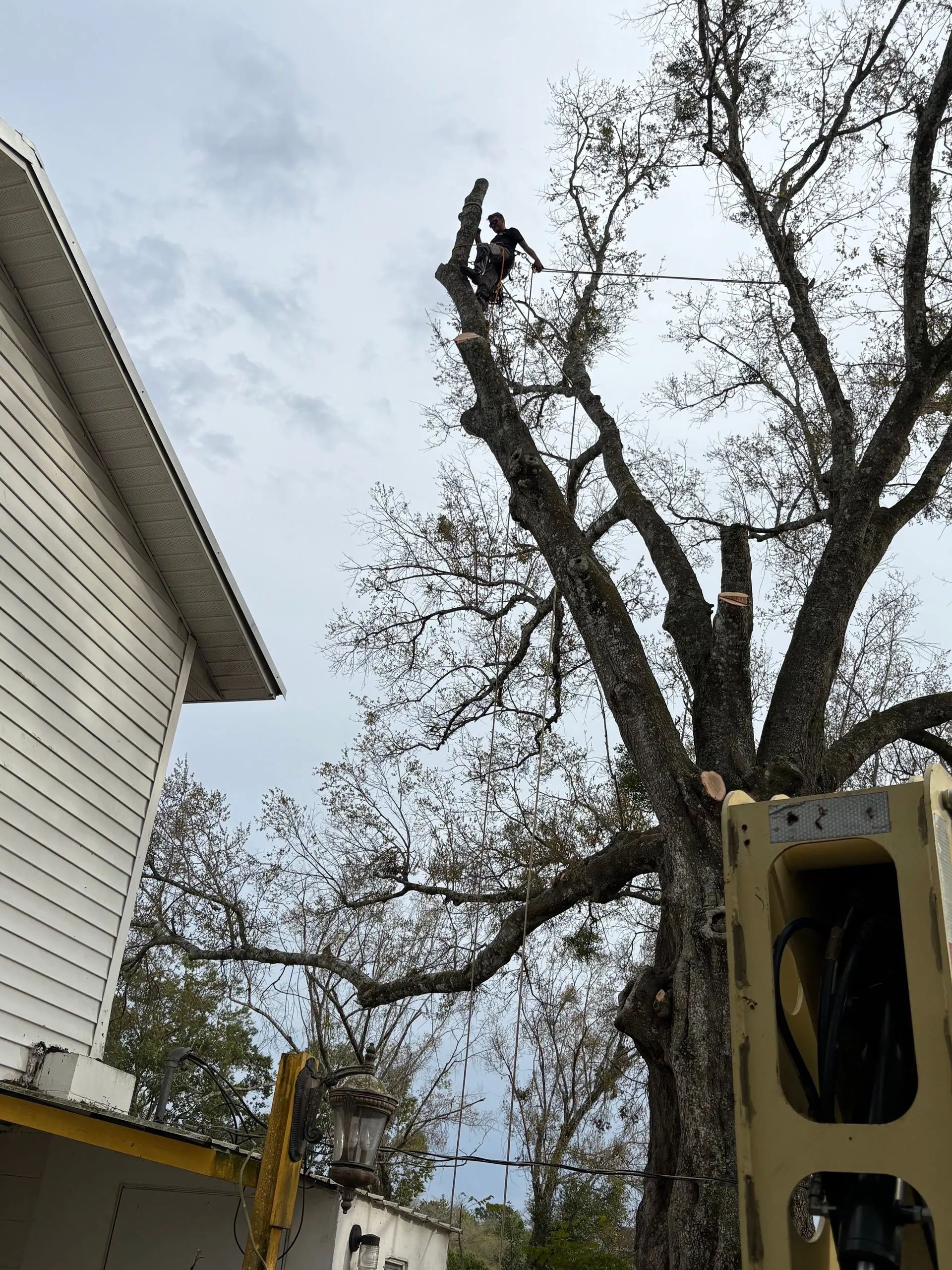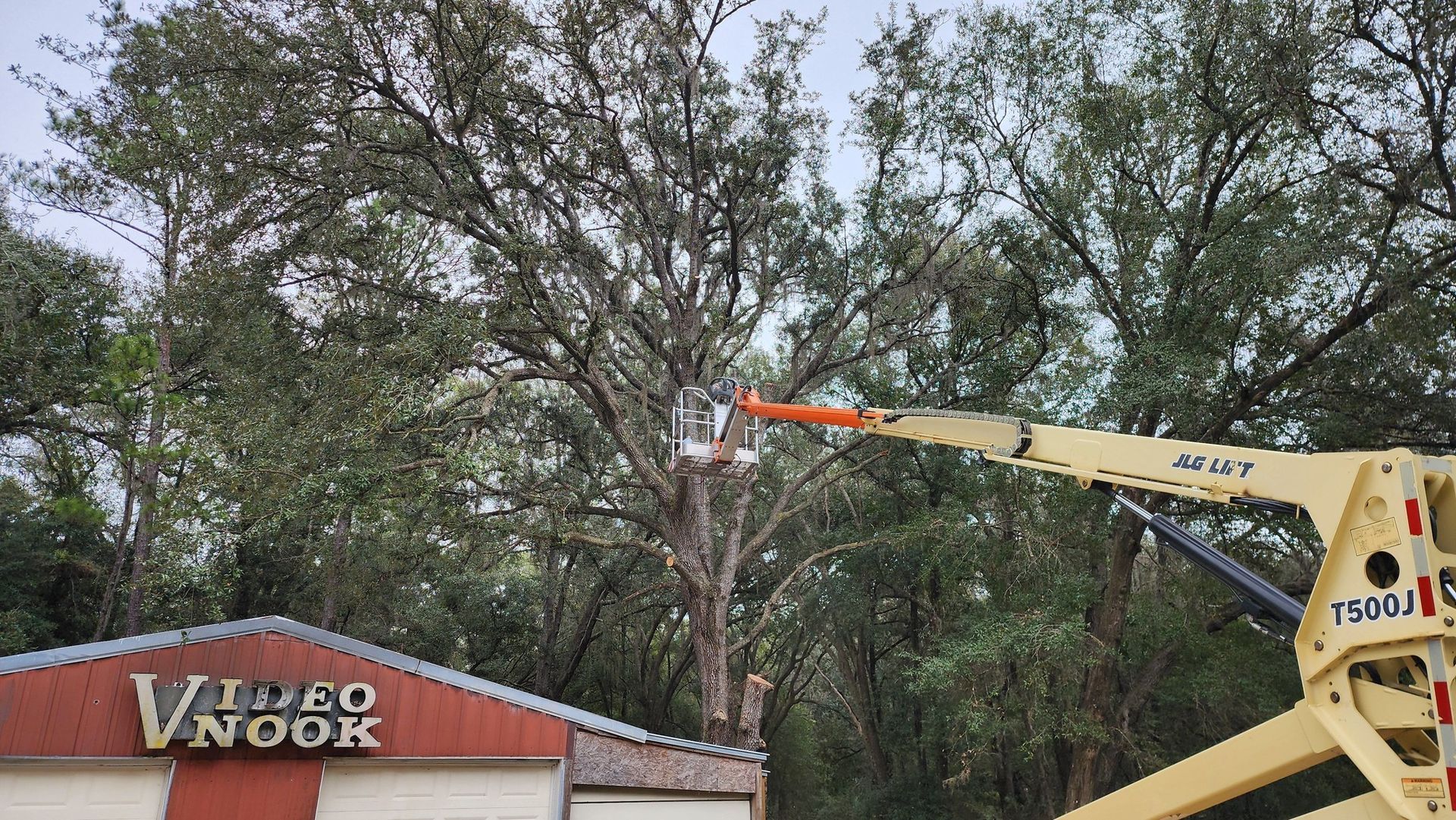
Dead Tree Removal in Deltona, FL: Why a Fully Dead Tree Comes Down Differently
QUICK ANSWER: Dead tree removal is the full removal of a tree that has lost its structural viability, not just individual branches, and it is treated as a distinct and higher-risk process compared to removing a living tree. Once a tree is dead throughout, its wood loses the moisture and fiber flexibility that make cutting predictable, so crews adjust rigging, sectioning, and drop planning accordingly. Deltona's large stock of laurel oaks planted when the city was platted in the 1960s means a growing number of properties are approaching the age where full tree mortality becomes a real possibility rather than a distant concern.
A dead branch hanging in an otherwise healthy tree is a hazard that can usually be corrected with targeted pruning. A dead tree is a different situation entirely. When a tree has died throughout, whether from root failure, disease, storm damage, or simple age, the entire structure has to be evaluated as a single, unpredictable unit rather than a collection of individual limbs to manage around. That distinction changes everything about how the removal gets planned and executed.
When a Tree Has Passed the Point of Pruning
Property owners sometimes ask whether an aggressive pruning could save a tree that is showing serious decline, and in some cases it can. But there is a point where the tree's core support system, the roots, the trunk, or both, has failed enough that no amount of canopy work addresses the underlying problem. Recognizing that threshold matters, because attempting to save a tree past that point delays a removal that was always going to be necessary while the hazard keeps standing.
Root Plate Lifting Or Soil Cracking
A tree beginning to tip, even slightly, often shows soil heaving or cracking around the base on the side opposite the lean, which signals the root system is losing its grip on the ground rather than just showing isolated damage.
Fungal Conks At The Base Or Trunk
Shelf fungus growing directly from the trunk or root flare is one of the more reliable visual signs of internal decay advanced enough to compromise structural strength, since these fungi typically feed on wood that is already breaking down.
Extensive Canopy Dieback With No Recovery
A tree that loses a majority of its canopy to dieback and shows no new growth through a full growing season has generally lost the vascular capacity needed to recover, regardless of how healthy the remaining live sections appear.
Deep Trunk Cavities Or Vertical Cracks
A hollow or split running any significant distance up the trunk removes structural material from exactly the location carrying the most load, and this kind of damage does not repair itself over time.
Why Deltona's Older Canopy Faces This More Than Newer Areas
Deltona was platted and developed largely through the 1960s and 1970s, and many of the laurel oaks planted or left standing during that period are now reaching an age where the species' natural tendency toward heart rot and internal decay becomes a real factor. Laurel oaks are a fast-growing shade tree, which is part of why they were so common in the community's original landscaping, but fast growth generally comes with a shorter functional lifespan and more susceptibility to interior decay than slower-growing species like live oak. A laurel oak that has stood on a Deltona property since the neighborhood was built is old enough now that a mortality assessment is a reasonable thing to have done, even if the tree still has a full green canopy.
TIP: A tree can look completely healthy from the ground while carrying serious internal decay, since the outer sapwood layer responsible for canopy growth can remain functional even after significant decay has developed deeper inside the trunk. Canopy appearance alone is not a reliable way to rule out structural failure.
Why Dead Wood Changes the Removal Process
Living wood bends before it breaks and gives a crew some predictability about how a cut section will behave as it separates. Dead wood does neither. Moisture loss makes dead wood more brittle, and internal decay, which is common in trees that have been dead for any length of time, can leave sections that look solid but have almost no actual load-bearing strength left. That combination means a dead tree can fail in a cut differently than the same cut would behave on a living tree of the same size, which is why removal technique adjusts specifically for it.
Extra Caution On Rigging Points
Ropes and rigging hardware are typically anchored to specific points in a tree during a controlled removal, and on a dead tree, those anchor points get evaluated individually rather than assumed reliable, since decayed wood in exactly the wrong spot can fail under load that solid wood would easily hold.
Smaller, More Frequent Sections
Dead trees are often taken down in smaller pieces than a comparable living tree would require, reducing the size and weight of any single piece being cut and lowered, which limits the consequences if a section behaves unpredictably during the cut.
Ground Crew Positioning
Because dead wood is more likely to shed unexpected debris, bark, or smaller broken sections during cutting, ground crews maintain wider clearance zones around a dead tree removal than they typically would for a comparable living tree.
Equipment Selection Based On Decay Location
Where decay is concentrated in a dead tree changes which removal method makes sense. Heavy internal trunk decay near the base may call for different equipment and technique than a tree that is structurally sound at the base but dead through the upper canopy.
What Happens After the Tree Comes Down
A full dead tree removal leaves more behind than a pruning project does. Stump removal or grinding is typically part of the conversation, along with debris hauling for the trunk sections and larger limbs that a standard yard cleanup was never built to handle. Properties with multiple mature trees sometimes use a removal as an opportunity to plan what replaces the space, whether that means opening the yard to more sunlight for turf or garden beds or simply leaving the area open.
Frequently Asked Questions
How can I tell if my tree is completely dead versus just declining?
A fully dead tree shows no green growth anywhere in the canopy through an entire growing season, brittle wood throughout rather than in isolated branches, and often bark that is loosening or falling away from the trunk. A declining tree may still have live sections mixed with dead ones, which is a different situation that sometimes responds to targeted pruning rather than full removal.
Is it more dangerous to remove a dead tree than a living one?
Generally, yes. Dead wood behaves less predictably under cutting pressure than living wood, since moisture loss and internal decay both affect how a section responds once it is cut free. Crews adjust rigging, sectioning, and clearance for this reason, which is part of why dead tree removal is treated as its own category of work rather than a standard removal.
Why do laurel oaks in Deltona seem to decline faster than other tree species?
Laurel oaks grow faster than many other oak species, and that faster growth generally comes with a shorter functional lifespan and greater susceptibility to interior decay and heart rot as the tree matures. Many of Deltona's laurel oaks were planted or established when the community was originally developed decades ago, which puts a meaningful number of them at an age where this tendency becomes relevant.
Can a dead tree be left standing if it is not near any structures?
In some cases, a dead tree in an open area away from structures, power lines, and high-traffic zones may be left standing temporarily, sometimes intentionally for wildlife value. That decision depends on the specific tree's fall radius, its lean, and how close it actually sits to anything that could be damaged if it fails without warning.
How long does a full dead tree removal take?
Timing depends heavily on tree size, canopy density, decay location, and how much clearance the crew has to work with around structures or landscaping. A simple removal in an open area may take a matter of hours, while a tree close to a home, fence, or power line with limited access requires more careful sectional work and additional time.
Does dead tree removal include stump removal?
Not automatically. Tree removal and stump grinding are generally handled as related but separate steps, since some property owners prefer to leave a stump in place or address it later. We can discuss stump removal as part of the same visit if you want the area fully cleared.
Knowing When a Dead Tree Must Come Down
A dead tree does not leave much room for debate, since the decision was already made once the roots, trunk, or both lost the ability to support the tree going forward. With 15 years of experience working through Deltona’s aging laurel oak canopy, Tree Pros + Odds & Ends treats every dead tree removal as its own project, shaped by decay location and how the wood is likely to behave under pressure. That difference matters more than it seems.
Laurel oaks planted when Deltona was first developed are reaching the age where full mortality becomes a realistic outcome rather than a distant concern, and a tree that looks green from the ground can still be carrying decay that a casual glance would never catch. Recognizing the difference between a tree that needs pruning and one that has genuinely reached the end changes the entire plan, since dead wood behaves unpredictably once cutting begins. That clarity keeps removal decisions accurate.
Recent Posts